Slay the Spire 2 Tips — 15 Beginner Mistakes to Avoid
Published 2026-09-207 min read
The Slay the Spire 2 tips that raise win rates: skipping rewards, elite pathing, rest-site math, shop priorities and the 15 mistakes every new player makes.
Slay the Spire 2 looks like a card game and plays like a budgeting game: HP, gold, card slots and floors are all currencies, and beginners spend all four at once. These are the tips that separate runs that reach Act 3 from runs that end on floor 12 — no Spoilers, just mechanics. New to the game entirely? Start with what Slay the Spire 2 is, then come back.
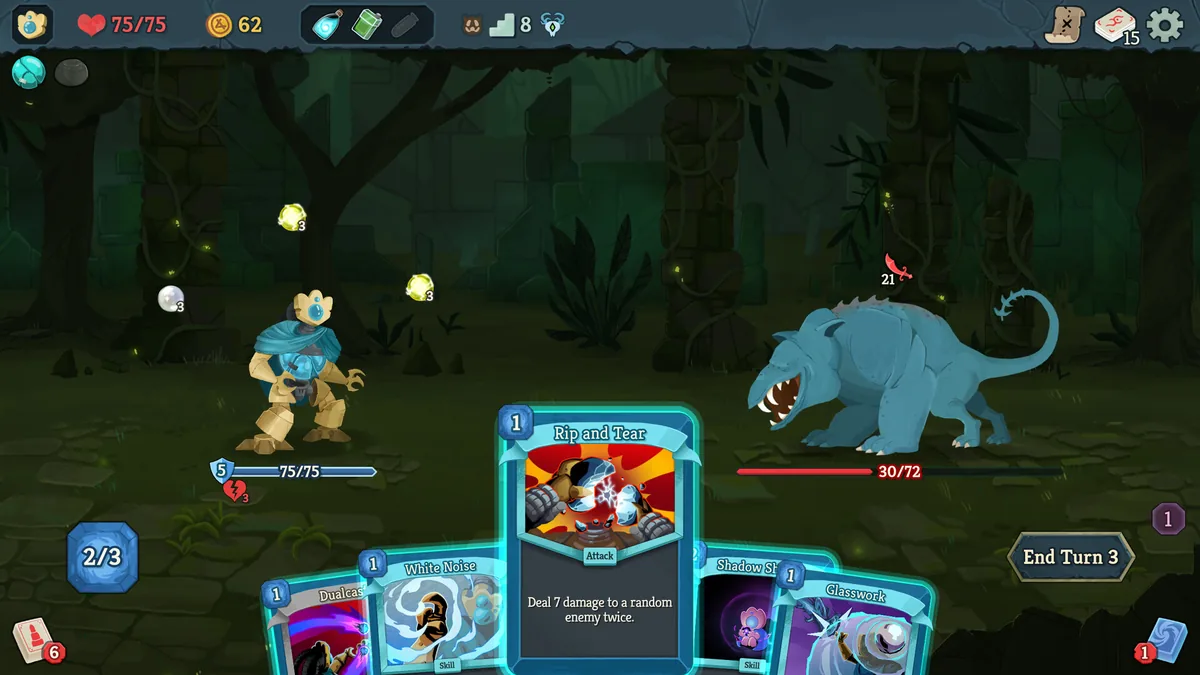
The 15 tips
1. Skipping is a card reward. The most common mistake is drafting all three options every time. Every card must fix a weakness or advance your plan — the deck building guide gives the full method.
2. Path for elites when you're strong, around them when you're not. Elites are the run's XP bar: relics and rare cards come from them. Check the map before your first reward — three fights into a route is too late to change your mind.
3. Rest sites: heal when the next fight can kill you, upgrade when it can't. With 30% max HP healing, low-HP characters get more from a Rest than a +3 damage upgrade. The room before a boss is always a rest site — plan your upgrade timing around it.
4. Take Ascension one level at a time. Ascension unlocks only after beating Act 3 with a character, and each level adds a permanent modifier (A8: more enemy HP, A9: more damage, A10: double Act 3 boss). If A3 keeps killing you on floor 20, grind a lower level and practice elite pathing first.
5. Buy card removals before cards. Shops sell consistency: a 75-gold removal permanently improves every draw for the rest of the run. A shiny rare improves one shuffle. See deck thinning for the priority order.
6. Learn enemy patterns instead of brute-forcing. Every enemy telegraphs. The Act 1 event and encounter basics cover the standard patterns — knowing that an enemy buffs on turn one tells you whether to race it or set up Block.
7. Don't hoard potions. A potion drunk at floor 15 is value; a potion held to the game-over screen is clutter. Potion belts and potion relics make stockpiling real, but only after you've proven you actually drink them.
8. Read the boss before you plan the act. Boss portraits sit at the top of the map. The full boss list tells you what each Act boss does — drafting AoE into a single-target boss is a wasted pick.
9. Weak and Vulnerable are damage. 1 Vulnerable is +50% damage taken; 1 Weak is -25% dealt. Applied at the right turn, one status card outperforms a whole rare attack. The Ironclad Vulnerable engine is built entirely on this math.
10. Know your class's win condition by Act 2. Ironclad scales Strength, Silent stacks poison or Shivs, Regent spends Stars, Necrobinder sacrifices summons, Defect charges orbs. If you can't name your deck's plan by floor 20, you don't have one — and the class tier list can help you pick a lane.
11. Events are rarely free. Most Act 1 events trade a curse, HP or max HP for a reward. The event guide lists the safe picks; when in doubt, take the exit option — a boring floor beats a crippled run.
12. Block doesn't carry by default. Block resets each turn unless a card or relic says otherwise. Barricade-style effects turn defense into an investment; without them, spend Block the turn you get it.
13. Co-op changes the math, not the rules. In multiplayer, dead players revive at the next floor, relics get divvied up (with Rock Paper Scissors ties), and rest sites gain Mend. Build your own engine first — you can't support a party from the floor.
14. Chase relics that change the economy, not the numbers. +3 damage relics are fine; relics that add card draw, energy or rest-site options compound every floor. The Ancient relic picks each act are the biggest power spikes in the run.
15. Die on purpose, sometimes. A run spent practicing one boss's pattern is worth more than a lucky win. Slay the Spire 2's difficulty is a curriculum — the Trash Heap, the Trial and every elite are teaching you the pattern that clears Ascension 10.
The one-line version
Draft less, path smarter, spend potions, read bosses, and treat every resource — HP, gold, card slots — as if it were your last one. It usually is.
Keep reading: