Slay the Spire 2 Beginner Guide — Your First Run, Step by Step
Published 2026-05-15Updated 2026-09-197 min read
A Slay the Spire 2 beginner's first run: why Ironclad is the right start, which boons and cards to take, act-by-act route planning, and the deck rules that keep new players alive.
Your first run in Slay the Spire 2 sets the tone for the next hundred. This guide walks it start to finish: the class to pick, the cards to grab, the routes to walk, and the small habits that separate a clean first clear from a brutal lesson.
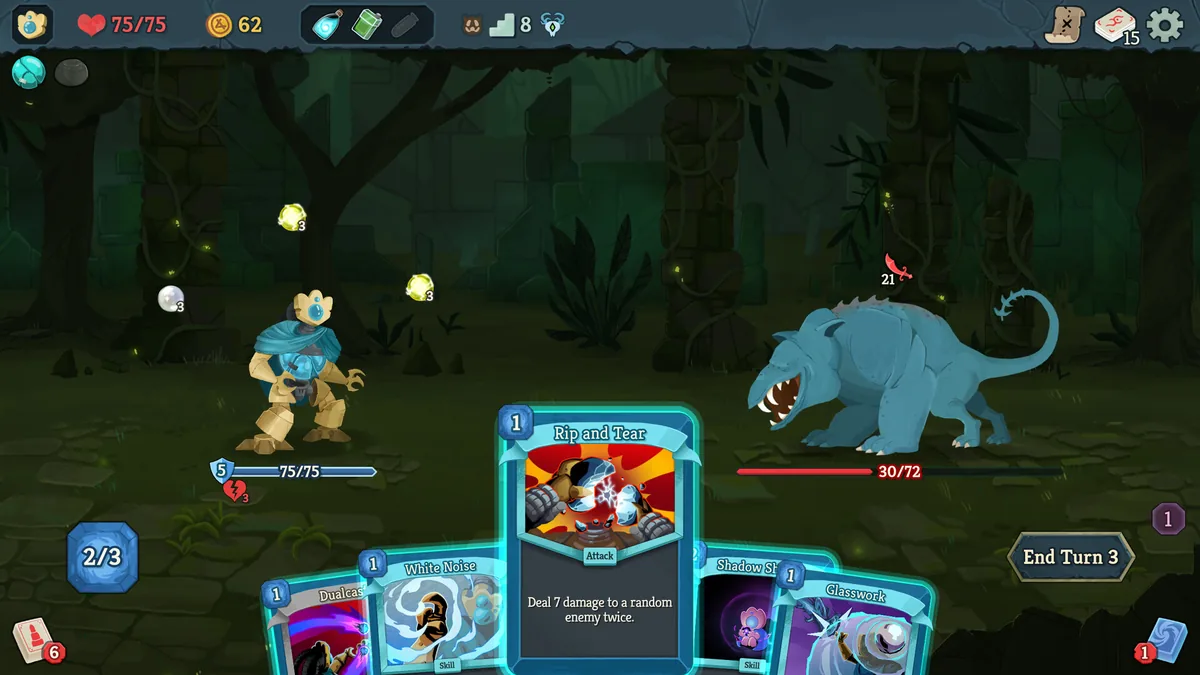
Pick the Ironclad first
The Ironclad is the game's tutorial class and its safety net: 80 max HP with Burning Blood healing 6 HP after every combat. His cards are direct — attack, block, apply Vulnerable, gain Strength — and his mistakes are survivable. The Silent rewards experience, the Defect rewards precision, and the Necrobinder and Regent add extra resource systems; all of them are waiting after your first clear.
Act 1: build the floor
- Take the Neow boon that stabilizes your opening — extra heal or card-removal style options beat greedy high-rolls when you are new.
- Fight regular monsters, skip elites. Act 1 elites hit harder than in the original game.
- Spend shop gold on card removal first, key cards second. Every removed basic Strike sharpens every draw.
- Draft standards: one or two cheap block cards per fight's worth of threat, a couple of solid attacks, and card draw. If a card needs a paragraph of synergies to be good, it is not good yet.
Act 2: pick a plan
By Act 2 your deck has a shape; your job is to commit to it. Double down on the mechanic your reward screens keep offering — Vulnerable-and-Strength for the Ironclad — and start declining cards that don't serve it. This is also when elites become worth fighting: one elite relic pays for a lot of risk once your engine turns. Camps become Forges while you are healthy, Rests when you are under about a third.
Act 3: close it out
Route to a campfire right before the boss and keep it — Forge your key card at full health, Rest at anything less. Play conservatively in ?-rooms: the run is nearly banked, and HP gambles are how finished decks die. In the boss fight, the plan is the same as every fight, just louder: block their big turn, spend your small turns scaling, and cash everything in one decisive window.
Five habits that carry every run
- Deck size is a resource. 15-20 cards is the sweet spot; every addition needs a reason. See the deck-thinning guide.
- Read intents, not HP bars. Enemy turn plans are printed above their heads; play against the intent, not the average.
- Block is a purchase, not an afterthought. Cheap block early in a turn protects the big play later in it.
- Potions are meant to be drunk. A potion still in the belt at the boss was a wasted pickup.
- Lose on purpose, faster. A doomed run is knowledge; abandon early, start fresh, and the unlock chain — Silent, Regent, Necrobinder, Defect — opens quickly.
Keep reading: