Slay the Spire 2 Core Mechanics — Block, Osty, Energy, Stars & the Card Pile
Published 2026-05-15Updated 2026-09-197 min read
The four systems under every Slay the Spire 2 run: block timing and block-keeping effects, Osty the Necrobinder's summon shield, energy vs the Regent's Stars, and the four card zones.
Underneath the classes and the card text, every Slay the Spire 2 run runs on four systems: block for survival, summons like Osty for damage laundering, the energy economy (plus the Regent's starry second wallet), and the four-zone card cycle that decides what you actually get to play. Master these and every new card you meet becomes readable at a glance.
1. Block: damage that expires
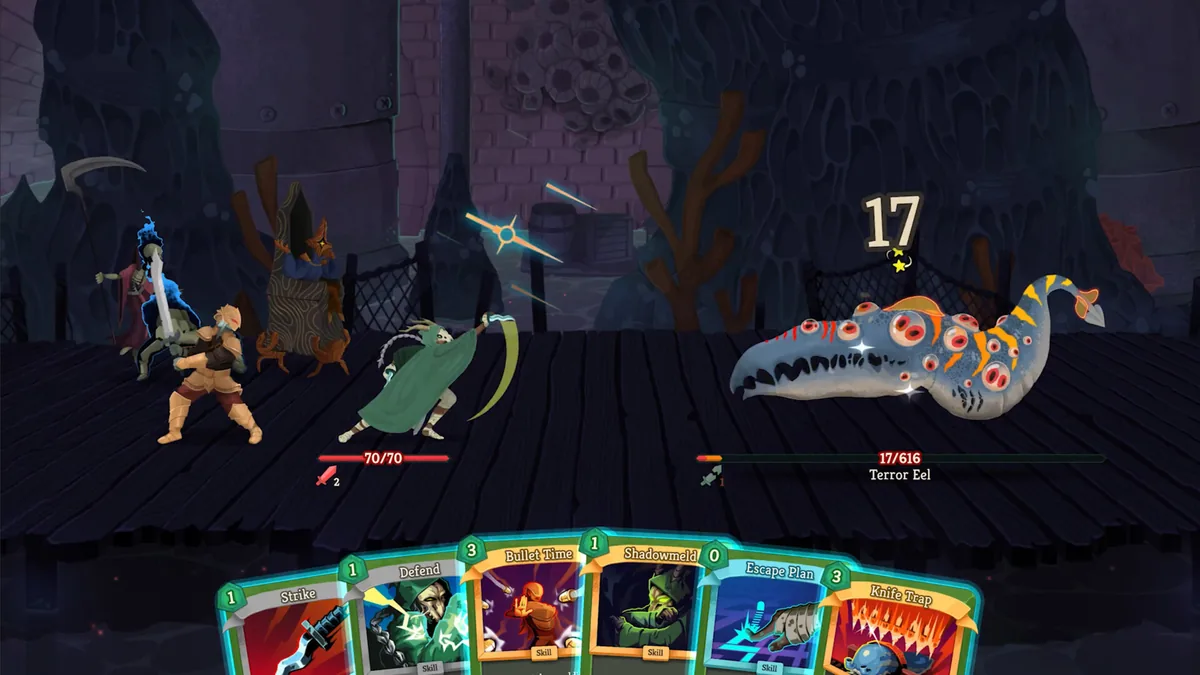
Block is a damage-absorption value: it cancels incoming attack damage and clears entirely at the start of your own turn. It blocks everything except direct HP loss.
Three effects break the expiration rule, and they anchor whole archetypes:
- Barricade — block stops expiring between turns. This is the Ironclad's fortressing engine.
- Afterimage-style retain effects — keep block into the following turn instead of clearing it.
- Tough-grip style gear — retains up to 10 block through the turn rollover.
The tactical core: block is cheap now and expensive later. Buying 6 block before the enemy's 20-damage telegraph is the best trade in the game; scrambling it after is the worst.
2. Osty: the Necrobinder's second health bar
Osty, the Necrobinder's skeletal left hand, is a Summon — a creature on your side of the board that enemies can be forced to attack. He starts at 1 HP, and every stack of the Summon effect adds 1 more HP, making him a rechargeable shield for a 66-HP lich.
- When Osty dies, he revives at the start of your next turn at 1 HP (extra HP cleared) — with the Necrobinder's starter relic Bound Phylactery, that resurrection happens automatically every turn.
- Devour Life heals him and converts his presence into damage; Bone Flute grants +2 block whenever he attacks.
The design question every Necrobinder run answers: is Osty a bodyguard you invest in, or a battery you drain?
3. Energy and Stars: one wallet, two currencies
Energy is the universal resource: 3 per turn, refilled and cleared at the start of each turn. Cards cost energy, relics and events can raise the ceiling, and high-cost decks live or die on turn planning — spend on cheap key cards first, bank the rest for the burst turn.
The Regent adds a second currency: Stars. Stars are his exclusive energy type, granted by relics like Divine Right (3 Stars at the start of each combat) and by his own cards. Two properties make Stars special:
- They persist between turns — no end-of-turn wipe.
- They convert: cards like Glow turn energy into Stars, and Regent cards turn Stars back into energy, damage or block, forming a closed loop.
Where energy punishes overspending, Stars reward banking — the Regent's strongest turns are the ones where saved Stars all spend at once.
4. The card pile: four zones, one loop
Every card in combat lives in one of four zones:
- Draw pile — your deck, shuffled at combat start; draw 5 per turn.
- Hand — what you can play this turn; unplayed cards discard at end of turn.
- Discard pile — spent and unspent cards; when the draw pile empties, the discard shuffles back in. This is the loop.
- Exhaust pile — cards played with the Exhaust keyword leave the loop permanently. Exhaust is deck compression on demand.
Two levers control the loop: draw (accelerate it — more draw means your key cards appear more often) and compression (Exhaust effects plus campfire removals shrink the pile). The dream state — an infinite loop — needs all three conditions at once: draw volume ≥ the loop's card count, energy recovery ≥ its total cost, and damage ≥ the kill threshold.
Keep reading: